
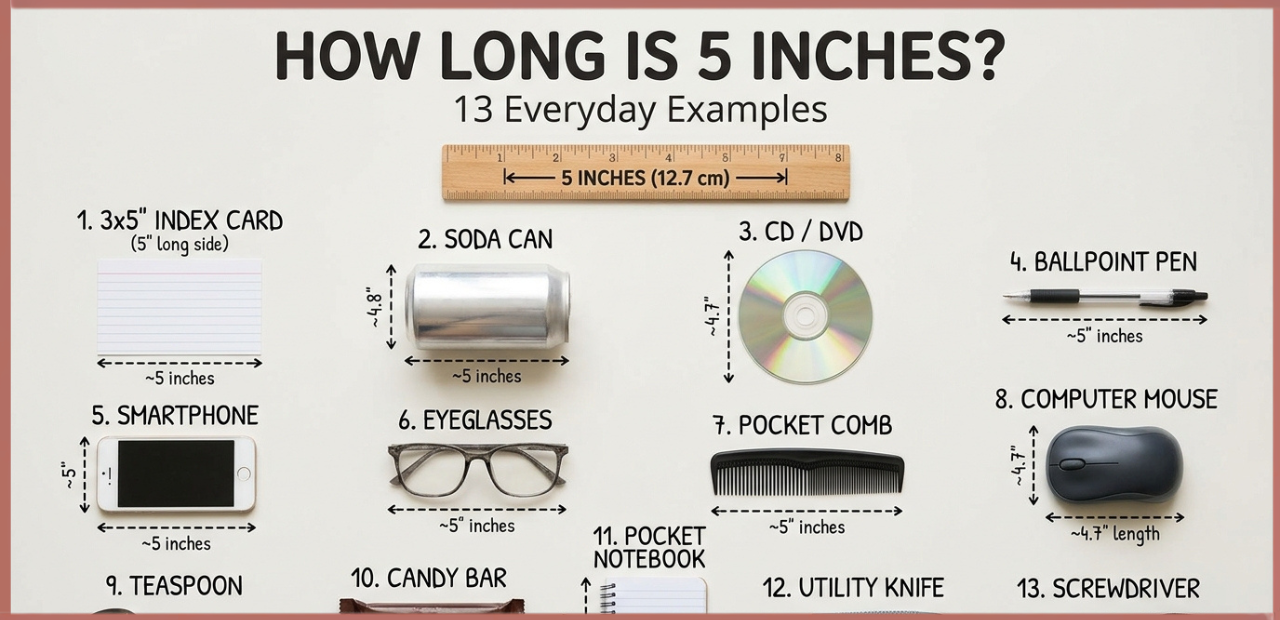
Have you ever looked at a small object and wondered how long five inches really is? Maybe you’re shopping for a phone accessory, checking the dimensions of a household item, choosing a pocket-sized notebook, or trying to picture a measurement without a ruler.
Five inches may sound like a tiny distance, but once you start comparing it with familiar objects, the measurement becomes much easier to understand.
Imagine holding a small comb in one hand, a compact gadget in the other, or a little notebook that fits neatly into your bag. Some everyday objects come surprisingly close to this length, giving you a practical way to picture the size without reaching for measuring tools.
And honestly, having a few familiar references in mind can save you time when you’re estimating dimensions in a shop or around the house.
In this guide, we’ll explore how long is 5 inches, what the measurement looks like in real life, and 13 everyday examples that help make it easier to visualize.
You’ll also learn 5 inches in cm, how to measure five inches without a ruler, and how to compare this length with your hand and other common objects.
give me table short ot the point
| Measurement | Equivalent |
|---|---|
| Length | 5 inches |
| Centimeters | 12.7 cm |
| Millimeters | 127 mm |
| Everyday Examples | Small paperback book width, TV remote control, smartphone height, large kitchen spatula, dessert plate radius, compact flashlight, travel toothbrush, sticky note pad length, hand soap bottle, coffee mug height, index card width, small notepad, sunglasses case |
How Long Is 5 Inches Exactly?
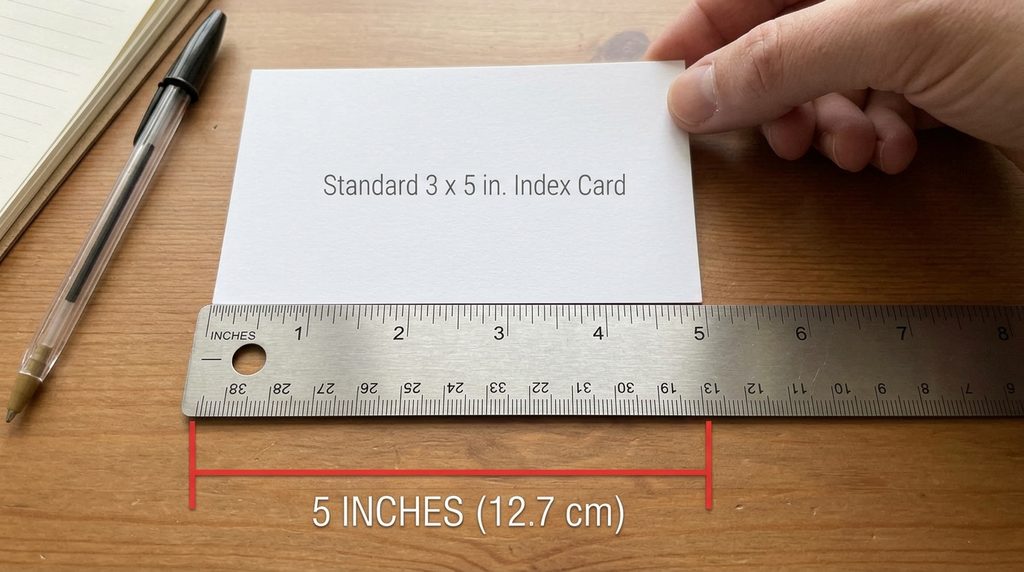
Five inches is a short but useful measurement that appears in many small household products, accessories, and personal items.
It is equal to 12.7 centimeters, which makes it easy to understand even if you’re more familiar with the metric system.
- Here are the basic conversions to remember:
- Measurement unit Equivalent length
- Inches 5 inches
- Centimeters 12.7 cm
- Millimeters 127 mm
- Feet Approximately 0.42 ft
- Meters 0.127 m
- Yards Approximately 0.14 yd
When someone asks, “How big is 5 inches?” the easiest answer is to picture a length of 12.7 centimeters from one end to the other. It’s less than half a foot, but noticeably longer than a few inches of space between your fingertips.
A standard 12-inch ruler offers another useful reference. Five inches reaches a little less than halfway along the ruler, making it simple to visualize the distance. If you’ve got a ruler sitting on your desk, take a quick look at the five-inch mark.
The measurement becomes much more familiar when you can actually see it.
What Does 5 Inches Look Like in Real Life?
A number by itself doesn’t always help us imagine size. The measurement becomes more meaningful when we connect it with things we already use, touch, or carry throughout the day.
A five-inch length is roughly the distance from the tip of your thumb to a point along your hand for some adults, although hand sizes vary considerably.
It can also be comparable to the length of certain grooming accessories, small tools, or pocket-sized objects.
The important thing is to remember that these comparisons are estimates. Not every computer mouse, comb, or phone accessory measures exactly five inches.
Their dimensions change according to the manufacturer and design, so use these objects as visual references rather than guaranteed measurements.
13 Everyday Examples That Are About 5 Inches Long
Let’s look at 13 familiar objects that can help you understand things that are 5 inches long.
Some are common household items, while others are useful accessories you might already have in your pocket, desk drawer, or travel bag.
1. A 3 × 5-Inch Index Card
An index card measuring 3 × 5 inches is one of the clearest examples of a five-inch dimension.
These small cards are frequently used by students, teachers, office workers, and anyone who likes writing quick notes on paper.
The card measures three inches across and five inches along its longer side. Hold it horizontally or vertically, and you’ll have a straightforward reference for understanding the measurement.
Its long edge gives you a genuine five-inch comparison, rather than a guess based on an irregular object.
Index cards are also handy for estimating space. If you’re trying to determine whether a small label, note, or paper insert will fit inside a box, comparing it with a 3 × 5-inch card can give you a useful starting point.
2. A Computer Mouse
eurosupplies.com
Many compact computer mice measure around five inches from the front to the back, although some models are shorter or longer.
If you use a desktop computer for work, there’s a fair chance you already have a mouse nearby that can help you picture this length.
Place the mouse on your desk and look at its longest dimension. Its curved shape may make the exact length less obvious, but the front-to-back measurement provides a useful comparison.
This example is especially helpful when shopping for computer accessories. A mouse measuring approximately five inches may be comfortable for some hands, while a smaller travel mouse might be easier to carry.
The best size depends on your grip, hand size, and how you intend to use it.
3. A Compact Smartphone
aiho.es
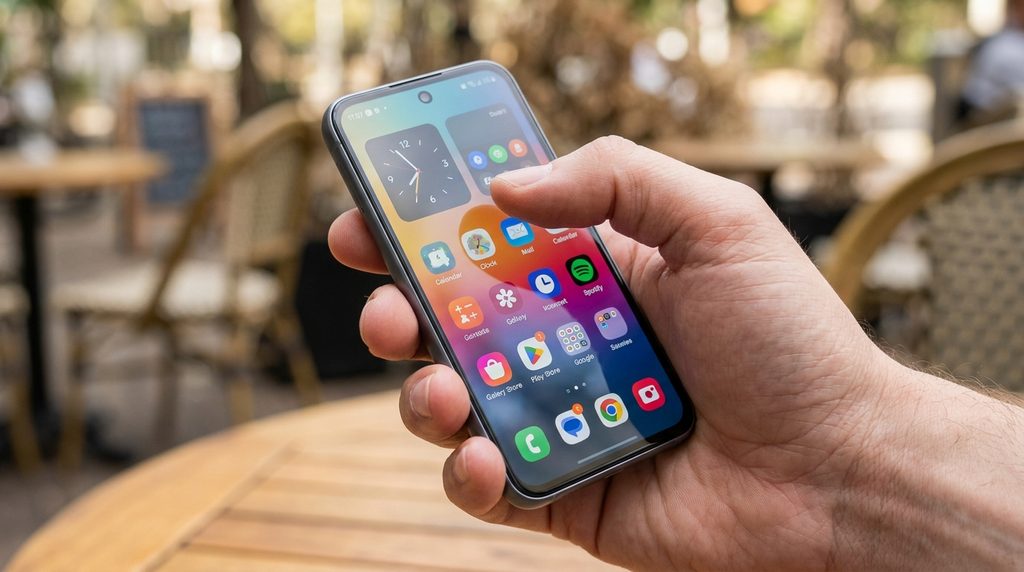
Some compact smartphones have a body length close to five inches, particularly older or unusually small models. However, modern smartphones vary widely, and many are considerably longer.
For this comparison, focus on the physical height of the device rather than its advertised screen size.
A phone with a five-inch display does not necessarily have a five-inch body because manufacturers measure screens diagonally from one corner to the opposite corner.
That difference matters when choosing a phone case or checking whether a device fits inside a small pouch.
If you’re wondering what does 5 inches look like next to a phone, compare the actual device dimensions instead of relying on the screen specification alone.
4. A Nail File
A compact nail file is another useful example of a five-inch object. Many emery boards and travel grooming files are available in sizes around this length, making them easy to store in a handbag, toiletry pouch, or desk drawer.
Its long, narrow shape also makes the measurement simple to understand. Unlike a rounded object, a nail file has a relatively straight edge that you can compare with a ruler or measuring tape.
If you have one at home, lay it flat and check its total length. You might find that yours is close to five inches, though some manicure tools are designed to be shorter for travel convenience.
5. A Pocket Comb
fruugo.co.uk
A pocket comb is a familiar personal-care accessory that can help you estimate five inches. Many compact combs fall somewhere near this length, particularly those designed to fit into a small bag or grooming kit.
The straight spine of the comb provides an easy visual reference. Even if its teeth add a little width, the overall length remains simple to compare with other objects.
Pocket combs are useful examples because they demonstrate how a five-inch item can be practical rather than bulky.
It is long enough to hold comfortably for grooming, yet small enough to slip into a pocket or travel pouch.
Of course, not every comb is the same size. Full-length styling combs can be longer, while miniature combs may be considerably shorter.
6. A USB Flash Drive
A USB flash drive is a convenient example of a small object, although most standard flash drives are much shorter than five inches.
A larger USB storage device, protective enclosure, or flash-drive case may approach this length.
This distinction is worth keeping in mind because familiar objects don’t always provide an exact measurement.
A tiny USB stick may measure only a couple of inches, while a case holding several drives could be much longer.
If you’re looking for a 5 inch object example in the technology category, a longer USB accessory or its protective case can work as an approximate reference.
For an accurate comparison, measure the whole object rather than just the metal connector.
7. A Pocket Notebook
cornersoutreach.org
Pocket notebooks come in many dimensions, and some compact versions measure around five inches along one side.
They’re popular with people who like to write reminders, shopping lists, short notes, or sudden ideas before they disappear from memory.
Picture a little notebook sitting beside your keyboard or tucked into a jacket pocket. Its small size makes it a useful way to understand the difference between a pocket-sized object and a full-size writing pad.
Some notebooks are close to five inches tall but have a width of only three or four inches.
Others may be shorter or taller, so check the product specifications if the size matters for a particular project.
8. A Travel Toothbrush
walmart.com
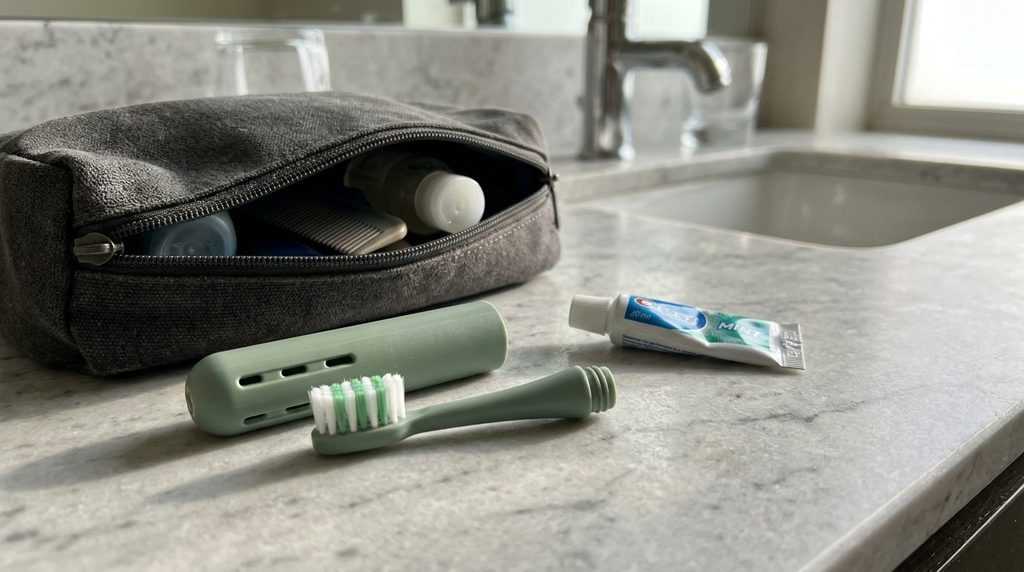
Travel toothbrushes are designed to save space, and some compact models measure close to five inches when folded or stored in their protective cases.
Their dimensions depend on whether you’re measuring the brush itself, a folding handle, or the complete case.
This makes a travel toothbrush a useful example of how product design influences size. A full-length toothbrush may be noticeably longer, while a folding model can become much smaller for packing.
If you keep a travel toiletry bag ready for weekends or longer journeys, look at the toothbrush or case inside it.
You may find a handy reference for understanding objects around 5 inches long, particularly when comparing small travel accessories.
9. A Small Grooming Comb
walmart.com
A small grooming comb is similar to a pocket comb, but its design may be intended specifically for styling hair or maintaining a neat appearance while travelling. Some models measure approximately five inches from one end to the other.
The comb’s length makes it practical for carrying around without taking up too much room. It can be stored in a bathroom cabinet, travel kit, or bag, and its straight shape is easy to compare with a ruler.
If your comb has a handle or a wider section for styling, measure its longest dimension to get the full length.
A comb that looks tiny in your hand may still be close to five inches, depending on its design.
10. A Small Teaspoon
Some teaspoons measure around five inches from the tip of the bowl to the end of the handle. Others are shorter or longer, so this example works best as a general comparison rather than an exact standard.
A teaspoon is easy to find in most kitchens, which makes it a convenient household reference. Lay one on a flat surface and look at its overall length.
Its narrow handle and rounded bowl help you recognize how five inches can appear on an object with an uneven shape.
Keep in mind that a teaspoon used for serving is not necessarily the same as a standardized measuring teaspoon.
A measuring spoon is designed around a particular volume, while its physical length varies according to the manufacturer.
11. A Small Soda Can
cardiffdistillery.co.uk
A small aluminum soda can can provide another useful visual comparison, especially if you have a compact beverage can in your refrigerator.
However, many standard soda cans are taller than five inches, while shorter specialty cans may be closer to this measurement.
The best way to use a can as a reference is to measure its height from the bottom rim to the top.
Don’t assume that every can of the same drink has identical dimensions because packaging sizes vary across brands and markets.
This example is particularly useful when shopping for a mini refrigerator, drink holder, or storage compartment.
If the available space is close to five inches high, checking the can’s actual height will prevent an annoying mismatch later.
12. A Compact USB Hub
A compact USB hub can measure close to five inches long, depending on the number of ports and the design of its enclosure.
These accessories connect multiple devices to a computer through a single hub, helping people manage keyboards, storage drives, and other peripherals.
A rectangular USB hub is especially useful for a 5 inch size comparison because its length is relatively easy to identify.
You can compare its body with a ruler or check the manufacturer’s dimensions before buying one.
Not every USB hub reaches five inches, of course. Some are tiny adapters, while larger hubs include extra ports or additional features that make the body longer.
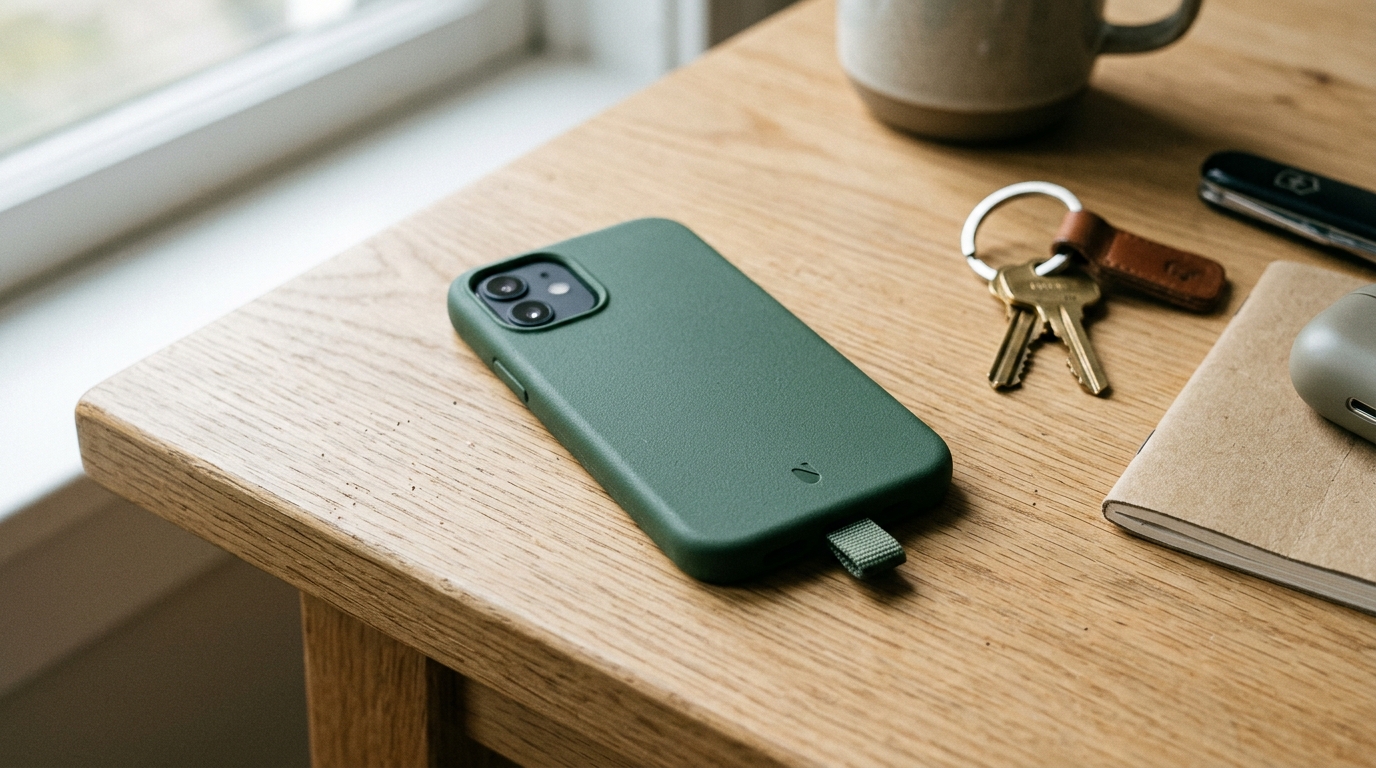
13. A Small Phone Case
casestore.com.au
A small phone case can be around five inches long, depending on the device it is designed to protect.
Some older phone cases and cases for compact smartphones fall close to this dimension, while modern large-phone cases may be considerably longer.
The case provides a helpful example because its outside dimensions are what matter when checking whether it will fit inside a pocket, pouch, or storage compartment.
If you want to compare a case with five inches, measure it from its top edge to its bottom edge.
Remember that a phone case may be slightly larger than the device itself because it needs to cover the corners and edges.
How to Measure 5 Inches Without a Ruler
You don’t always need a measuring tool to make a reasonable estimate.
When you’re trying to understand a small dimension at home, several familiar references can help you get close.
However, if you need an exact measurement for a product, craft project, or installation, use a proper ruler or measuring tape whenever possible.
Visual estimates are useful, but they can be off by more than you might expect.
Use a Standard 12-Inch Ruler
If you have access to a ruler, finding five inches is simple. Start at the zero mark and follow the scale until you reach the five-inch mark.
Be sure to align the beginning of the object with zero rather than the physical end of the ruler. Some rulers have a small margin before the first marking, and that can affect the result.
Compare the Length With Your Hand
Your hand can provide a rough human hand measurement reference. Depending on your hand size, the distance across part of your palm or between selected fingertips may be near five inches.
But hands vary considerably between adults and children, so don’t treat your palm as a universal measuring device. Use it for a quick estimate, then verify the measurement if precision matters.
Use a Measuring Tape
A flexible measuring tape works well for both straight and curved objects. Extend it to the five-inch mark and place the object alongside it.
This is especially useful for measuring accessories, fabric items, kitchen storage spaces, or objects with rounded edges. A measuring tape also helps you distinguish an object’s length from its width or height.
Use a Printable Ruler Carefully
A printable ruler can be helpful if you don’t have a physical ruler nearby. Print one at its intended size and check it against a known measurement before relying on it.
Make sure the printer settings don’t automatically enlarge or shrink the page. Selecting “actual size” or 100% scale is generally the appropriate starting point, but verify the printed scale with a trusted ruler if possible.
How Long Is 5 Inches Compared With Your Fingers?
Your fingers offer a familiar way to estimate small lengths, but they aren’t standardized measuring tools.
The width of a thumb, the length of a pinky finger, and the size of an adult hand can differ quite a bit.
For some people, five inches is similar to the distance from the tip of the thumb to a point near the base of the palm. For others, that comparison will be noticeably shorter or longer.
- Here are a few useful reminders:
- – Thumb width: Useful for rough comparisons, but the width varies from person to person.
- – Pinky finger: Its length may help with visual estimation, although it is usually much shorter than five inches.- Palm width: Can provide a rough reference, depending on the person’s hand size and the exact points being compared.- Hand span: The distance between spread fingertips is often longer than five inches for adults, but it is not consistent across individuals.
The trick is to learn your own approximate measurements. If you repeatedly measure your thumb width, palm width, or hand span with a ruler, you can use those personal references for quicker estimates later.
5 Inches in CM, MM, Feet, and Meters
The metric system is widely used around the world, including in Pakistan, while inches remain common in product descriptions, clothing measurements, screens, and many imported goods.
Knowing both systems makes it easier to understand dimensions when shopping online.
- The conversion is straightforward:
- Conversion Calculation Result
- 5 inches to centimeters 5 × 2.54 12.7 cm
- 5 inches in mm 12.7 × 10 127 mm
- 5 inches to feet 5 ÷ 12 0.4167 ft
- 5 inches to meters 12.7 ÷ 100 0.127 m
- 5 inches to yards 5 ÷ 36 0.1389 yd
The key conversion to remember is that one inch equals exactly 2.54 centimeters. Multiply the number of inches by 2.54 to convert it to centimeters, or multiply the centimeter value by 10 to get millimeters.
For example, if a product description says it is five inches long, you can immediately recognize that it measures 12.7 cm. This makes it easier to compare dimensions listed by sellers who use different measurement systems.
How Does 5 Inches Compare With 4, 6, 8, and 10 Inches?

Sometimes, the easiest way to understand a measurement is to compare it with nearby lengths.
A five-inch object sits between four and six inches, and the difference becomes clearer when you imagine placing several objects side by side.
- Length Centimeters Everyday understanding
- 4 inches 10.16 cm A little shorter than five inches
- 5 inches 12.7 cm The reference measurement in this guide
- 6 inches 15.24 cm One inch longer than five inches
- 8 inches 20.32 cm Three inches longer than five inches
- 10 inches 25.4 cm Twice the length of five inches
The difference between four and five inches may not look dramatic at first, but it can matter when you’re selecting a small case or checking whether an item fits inside a tight space.
Similarly, eight inches is considerably longer than five inches, even though both measurements may describe compact household products.
A little practice with these comparisons helps you estimate sizes more confidently. Soon, you’ll have a better sense of what different lengths look like without needing to convert every measurement in your head.
Is 5 Inches Big or Small?
Whether five inches is big or small depends entirely on what you’re measuring. For a pocket accessory, it may be a convenient compact size.
For a smartphone, it could be relatively short. For a shelf or table, however, five inches would be a very small dimension.
Think about the purpose of the object before deciding whether its size is appropriate. A five-inch grooming comb may be easy to carry, while a five-inch storage compartment might be too small for the items you need to keep inside it.
This is particularly important when shopping online. Product images can make objects appear larger or smaller depending on camera angles and surrounding items.
Always check the listed length, width, and height before purchasing something that must fit a particular space.
Why Five-Inch Measurements Matter When Shopping
Understanding a 5 inch measurement is useful when comparing products, choosing accessories, and deciding whether an item will fit your needs. Even a small difference in length can affect how comfortable or practical a product is.
For example, someone buying a pocket notebook might want a size that fits into a jacket pocket.
Someone looking for a compact computer accessory may need a hub that fits neatly beside a laptop.
A person choosing a protective case may need to know the exact external dimensions rather than relying on a product photo.
- A good habit is to check three dimensions whenever possible:
- – Length: The measurement from one end to the other.
- – Width: The distance across the object.
- – Height or thickness: How tall or thick the item is, depending on its orientation.
- These measurements aren’t interchangeable.
An item that is five inches long may be only two inches wide, so knowing just one dimension won’t always tell you whether it will fit in a particular space.
Frequently Asked Questions About How Long Is 5 Inches
How long is 5 inches exactly?
Five inches is exactly 12.7 centimeters or 127 millimeters. It is approximately 0.42 feet, making it a little less than half a foot long.
What does 5 inches look like on a ruler?
On a standard ruler, five inches is the distance from the zero mark to the five-inch mark. It’s slightly less than halfway along a 12-inch ruler.
How many centimeters is 5 inches?
Five inches equals 12.7 cm. To convert inches to centimeters, multiply the measurement by 2.54.
How many millimeters is 5 inches?
Five inches equals 127 mm. Since one centimeter contains 10 millimeters, 12.7 centimeters is equal to 127 millimeters.
Can I measure 5 inches with my hand
You can estimate five inches using your hand, but the result won’t be exact unless you’ve measured your hand beforehand. Palm width, thumb size, and finger length vary between individuals.
Is a smartphone five inches long?
Some compact smartphones are around five inches long, but many modern models are longer.
Also, a phone’s advertised screen size is measured diagonally, not along the body’s longest edge.
What household items can help me visualize five inches?
A 3 × 5-inch index card, some pocket combs, certain nail files, and compact accessories can help you visualize the measurement. Always check the actual dimensions because product sizes vary.
Is five inches the same as half a foot?
No. Half a foot equals six inches, so five inches is one inch shorter than half a foot.
Conclusion:
Making Sense of Five Inches in Everyday Life
Understanding how long is 5 inches becomes much easier when you connect the number with familiar objects.
From a 3 × 5-inch index card to a compact comb or a small computer accessory, everyday items can help you picture a measurement that might otherwise feel abstract.
The most important conversion to remember is simple: five inches equals 12.7 centimeters or 127 millimeters.
Once you know that, comparing product descriptions and estimating small dimensions becomes less confusing, especially when different sellers use different units.
Keep in mind that the examples in this guide are visual references, not universal measurements.
A computer mouse, pocket notebook, or travel toothbrush can vary in size, so use a ruler or measuring tape when accuracy matters.
Next time you come across a product listed as five inches long, you’ll have a better idea of the space it may occupy.
And if you have a favorite household object that makes this measurement easy to picture, share it in the comments.
Your everyday reference might help someone else understand five inches a little more clearly, too.
